
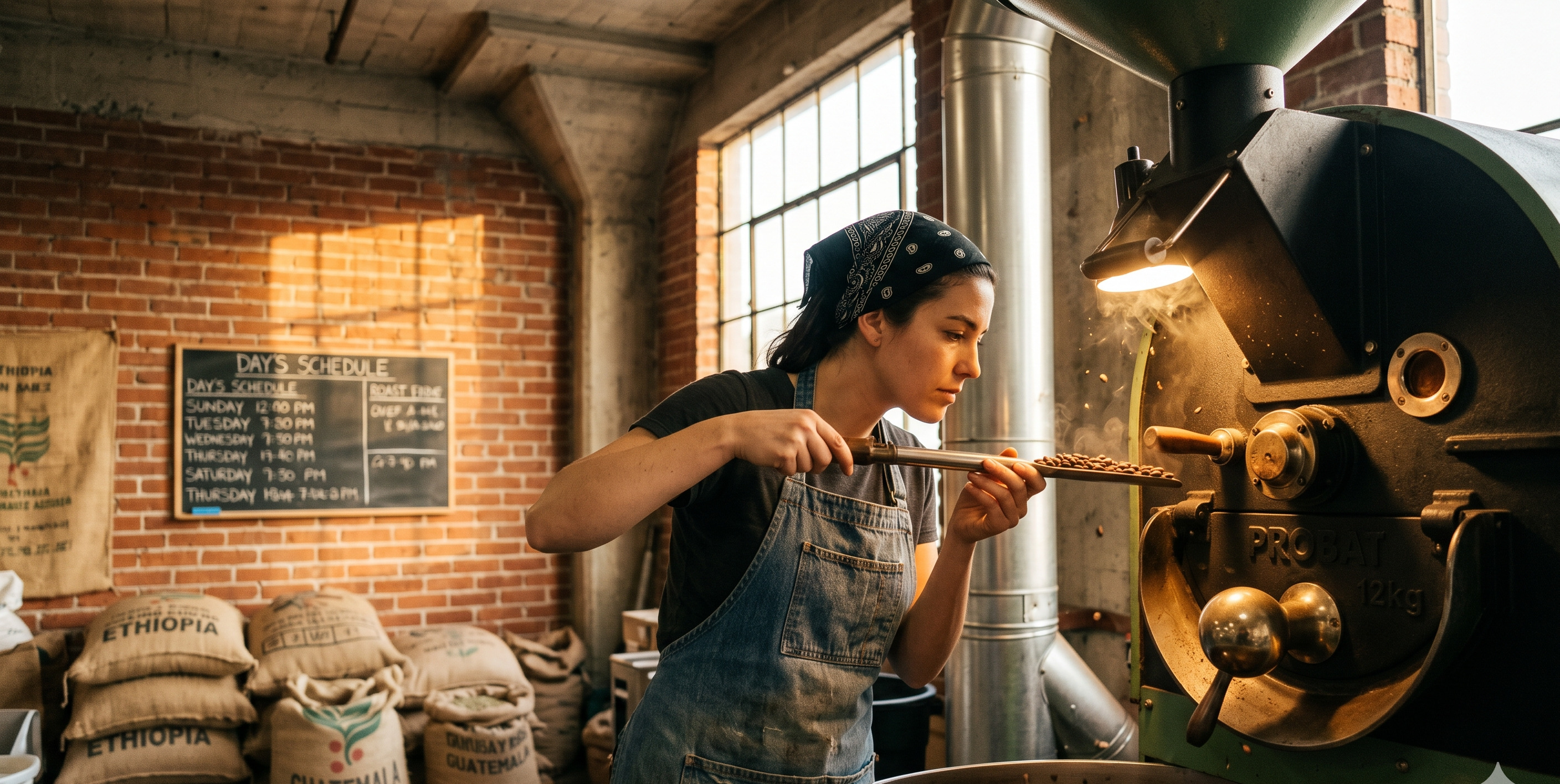
On a back street in Bernal Heights, Marisa Padilla roasts twelve pounds a day from two farms. She names the growers. She refuses every wholesale order under a written promise.
IN COLLABORATION WITH OLIVE BRANCH ROASTERS
ISSUE №57 · MAY 30, 2026 · 5-MIN READ
OLIVE BRANCH ROASTERS AND THE TWO-LOT THEORY OF COFFEE
BY DAISY · PHOTOGRAPHS BY KIWI
The drum is loud and Marisa Padilla is louder. She is calling out times to a roast log nobody else reads. “First crack at seven thirty-eight. Drop at nine ten.” She marks it in pencil. The shop on Cortland Avenue does not have a barista. It has Marisa, a roast drum, and twelve pounds of green beans on the floor.
Olive Branch Roasters opened in 2021 after Marisa quit a sales job at a national coffee importer. The importer carried five hundred lots from forty countries. She knew the spreadsheet, not the farmers. She did the math and decided she could only really know two. So she picked two. A washed Ethiopian from a co-op outside Yirgacheffe. A natural Colombian from a family farm in Huila. She has bought from the same two sources every harvest since. The Ethiopian co-op got a new manager last year. She flew to meet him. She does not call this marketing.
The two-lot theory came from a fight she had with a wholesale buyer in her first year. The buyer wanted to lock in twelve months at a fixed price below cost. Marisa said no. The buyer said everyone does that. Marisa said she did not need to be everyone. The wholesale account went away. So did the next four. By month nine, she had two restaurant accounts and twelve regulars who walked to Cortland on Sunday mornings for whole bean. By month eighteen, she had thirty-seven regulars. By month twenty-four, she had a waitlist for the Ethiopian.
The shop is small. Twelve pounds a day is the ceiling. Marisa has done the math on what would happen if she went to twenty-four pounds. She would need a second drum. She would need an employee. She would need to source a third lot to keep the menu full. She has decided, three separate times, that the math does not justify the choice. The two-lot theory has held.
The Saturday morning regulars know what she pulls before she pulls it. Diego brings her a sandwich from the deli across the street on third Saturdays. Mrs. Chen waits for the natural Colombian to land in October every year and buys five pounds the first day it ships. A kid from down the block has done his Cal Berkeley admission essay at one of her two tables. He came in with the acceptance letter. She framed her copy.
The roaster broke last March. A bearing seized. The repair took eleven days. Marisa offered every regular a refund on their standing order. Two took her up on it. The rest waited. When the drum came back, she pulled a special small batch from the Colombian as a thank-you and gave it away free.
She is not opening a second location. She is not opening on Sundays. She is not running classes. She is sourcing two lots, roasting twelve pounds a day, and naming the growers on every bag. The whole publication built around the keepers theory could close tomorrow and Marisa would still be at the drum at seven a.m., pencil in hand, calling out times to a log nobody else reads.
“I do not need to be the biggest. I need to know the people I buy from. That is the whole thing.”
MARISA PADILLA, FOUNDER
WORK WITH THE KEEPERS
Partner packages
Sponsor a saturday, a profile, a season, or a year. Real editorial firewall.
Tell us your story
Operator, keeper, regular, kid with a paper route. Pitch us what you know.
Send a tip
Anonymous if you want. We chase every one we can verify.
We're hiring
Student journalism roles. Paid. SF or Bay Area. See the open list.
READ NEXT
ISSUE №58 · BY ERIC

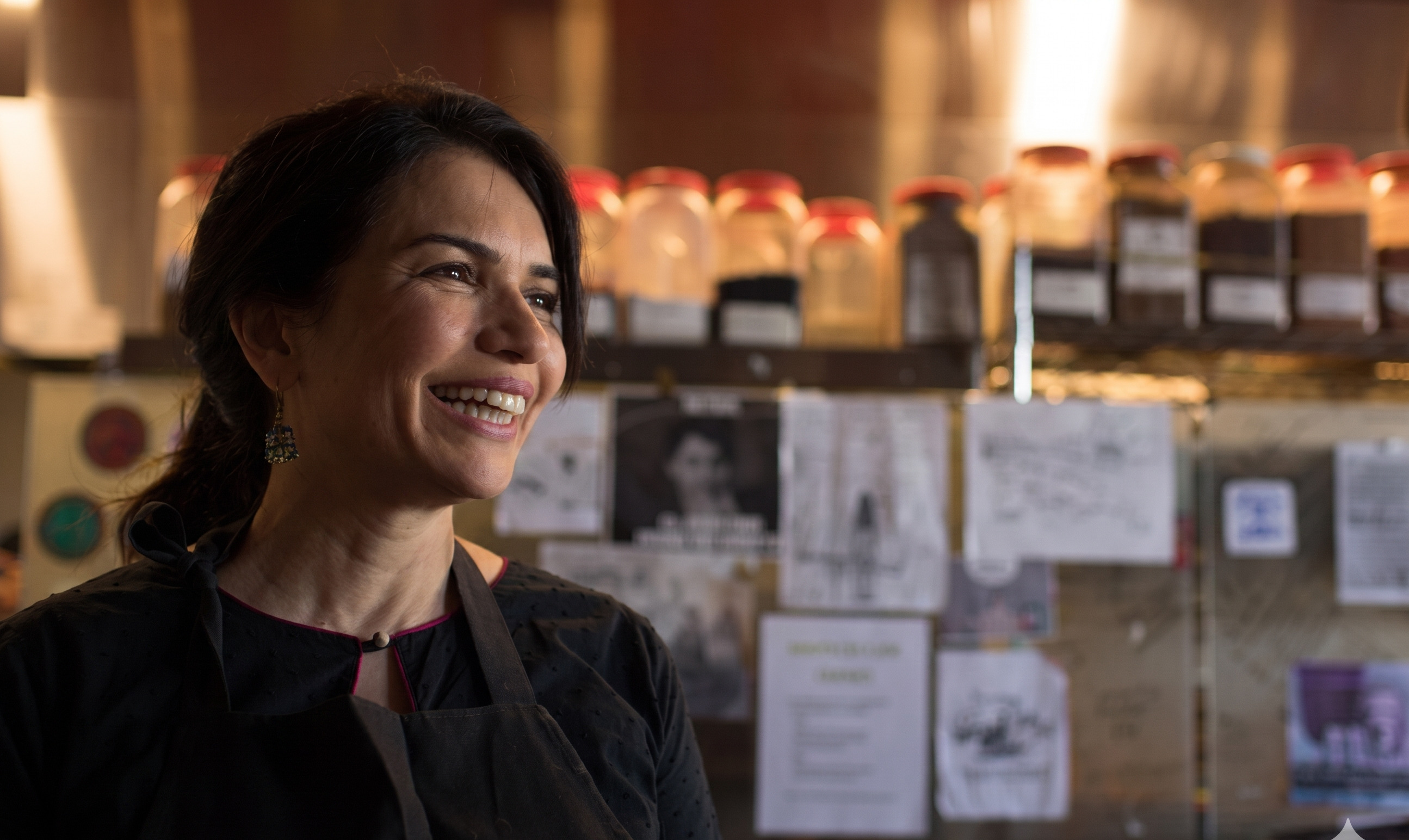
Zareen's Opens a Fourth Kitchen
ISSUE №56 · BY NICHOLAS

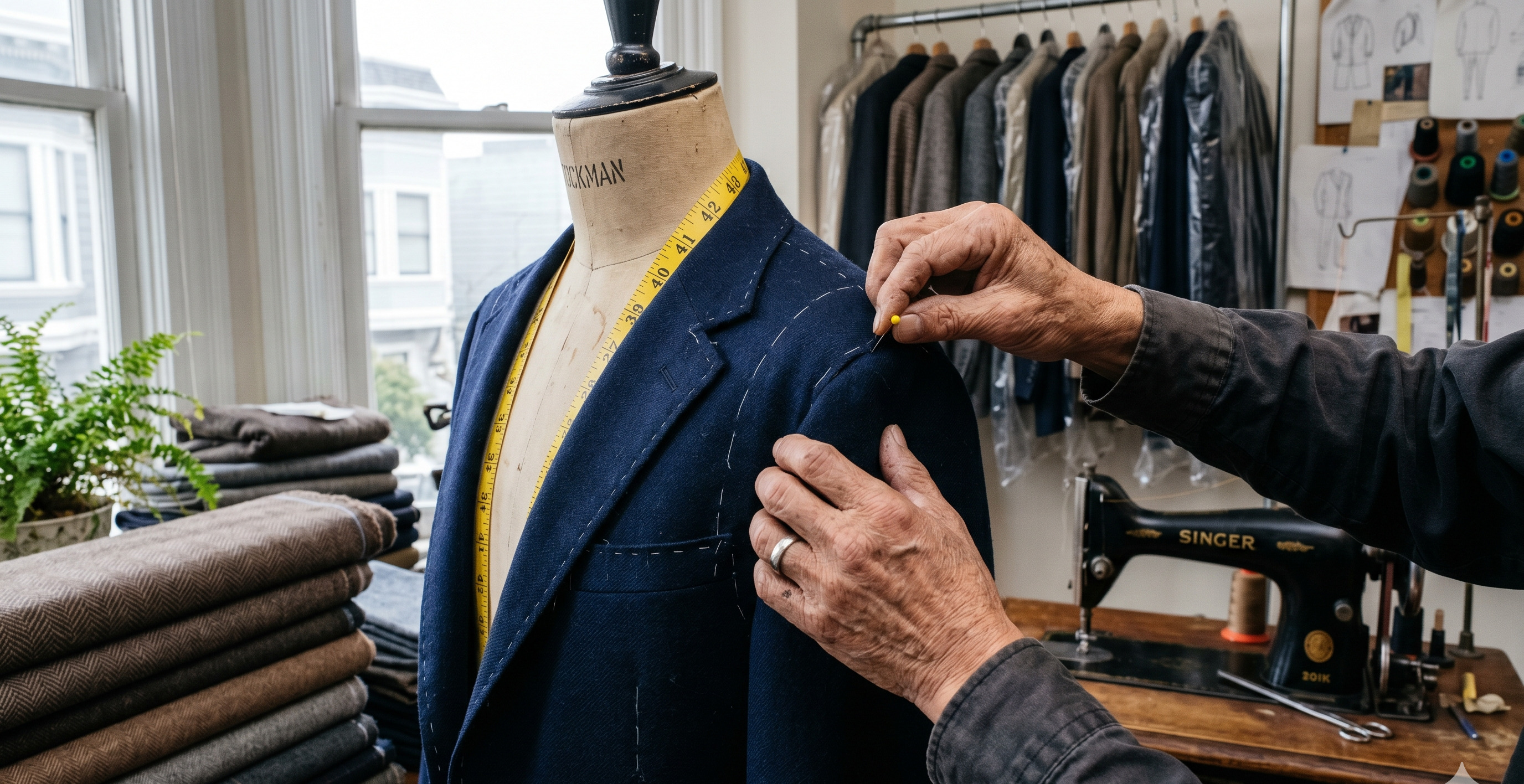
Hand & Foot Tailoring and the Cantonese Hem Rule
ISSUE №55 · BY DAISY